
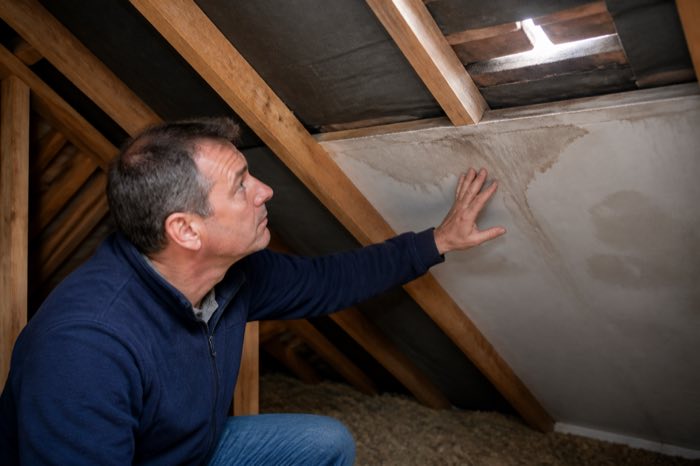
A homeowner checking a water stain in a loft for early roof damage

How To Spot Early Signs Of Roof Damage Before It Becomes Expensive

Your roof does a lot of work quietly. Most of the time, you only think about it when there is already a leak, a missing tile, or a damp patch that has found its way indoors. The problem is that roof damage rarely starts as a major emergency. In many cases, the early signs are small, easy to miss, and much cheaper to deal with if they are spotted in time.

If you know what to look for, you can often catch a roofing problem before it spreads into the timbers, insulation, ceilings, or walls. Below are some of the early warning signs that your roof may need attention.

Check for marks inside the loft or ceiling

A small water stain in the loft can be one of the first signs that rain is finding a way through the roof. It may appear as a brown patch on timber, a darker mark on insulation, or a faint stain on the ceiling below. These marks can come and go depending on wind direction and rainfall, so they should not be ignored just because the area feels dry when you check it.
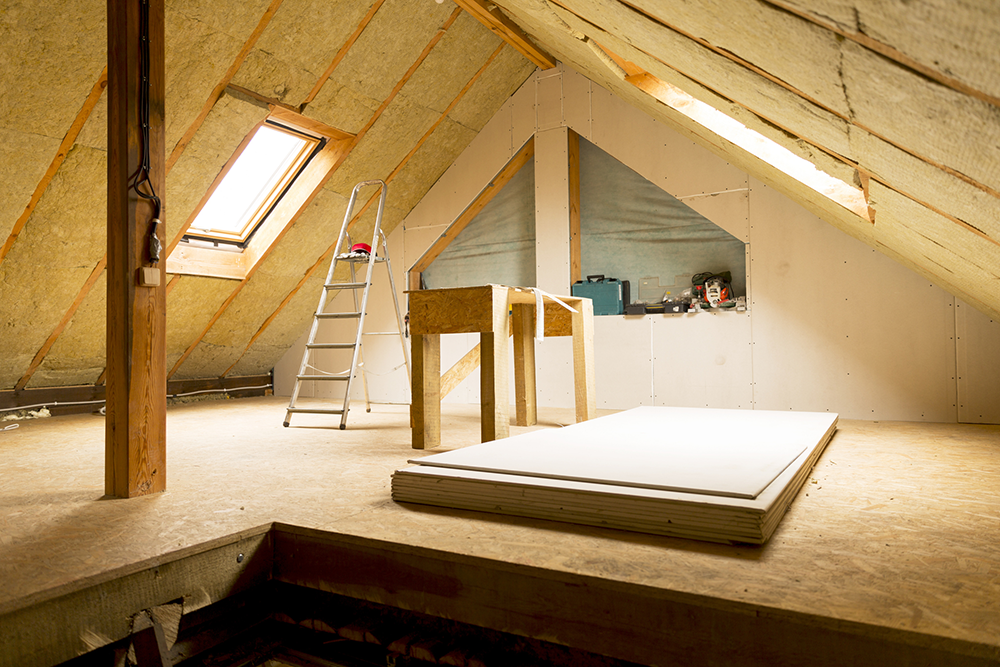
It is also worth looking for musty smells, mould growth, or insulation that feels damp or compressed. These are all signs that moisture may be getting into the roof space. Even a small leak can cause problems over time, especially during wet or cold months when the roof has less chance to dry out properly.

Look for slipped, cracked, or missing tiles

From ground level, you may be able to see tiles that have moved out of line, cracked, or disappeared altogether. A single slipped tile might not look serious, but it can leave the felt and timber underneath exposed to rain. Once water gets beneath the outer layer of the roof, it can travel before it becomes visible indoors.

After strong winds, heavy rain, or a cold spell, it is sensible to stand back from the property and check the roof from a safe position. Do not climb onto the roof yourself. A quick visual check from the garden, driveway, or upstairs window can still tell you a lot.

Pay attention to gutters and roof edges

Blocked gutters can cause water to back up and spill into places it should not go. Leaves, moss, broken tile pieces, and other debris can stop rainwater from draining properly. Over time, that extra water can affect fascias, soffits, brickwork, and the lower edge of the roof.
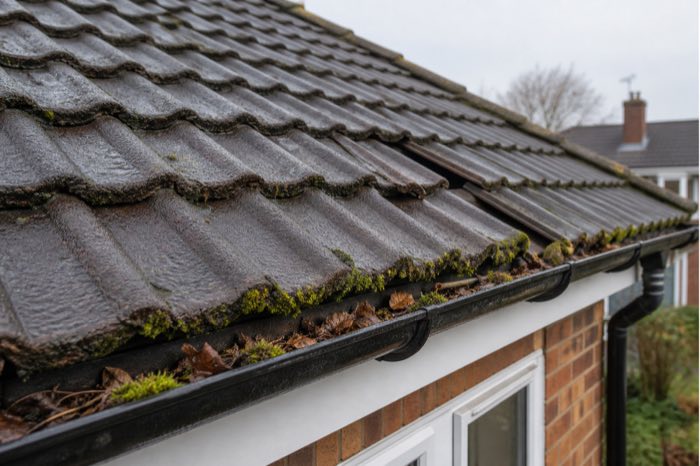
Roof tiles and gutters showing moss, leaves, and early signs of roof maintenance issues

Moss on the roof is not always an emergency, but heavy moss growth can hold moisture and add weight. It can also break away and block gutters. If you regularly find pieces of tile, grit, or mortar in the guttering, that may be a sign that parts of the roof surface are wearing down.

Watch the chimney and flashing

Chimneys are a common place for roof leaks to begin. The flashing around the chimney has to keep water out where two different surfaces meet, and those joints can loosen or crack with age. Damaged pointing, gaps in the mortar, or lifted leadwork can all allow water into the roof.
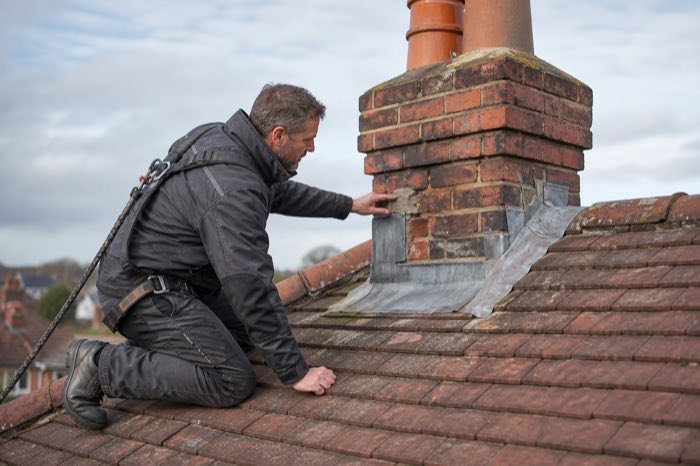
A roofer inspecting chimney flashing for early signs of roof damage

If you can see loose mortar, staining around the chimney breast, or damp patches near a fireplace, it is worth arranging a proper inspection. Small repairs around a chimney are usually much easier to manage than damage that has been left through several seasons of bad weather.

Do not wait for a leak to become obvious

One of the biggest mistakes homeowners make is waiting until water is dripping through the ceiling. By that point, the leak may already have affected plasterboard, insulation, timber, or electrics. Early roofing repairs are usually more straightforward, less disruptive, and less expensive than emergency work after a leak has spread.

If something looks out of place, it is better to ask for advice sooner rather than later. A professional roofer can check the condition of the tiles, flashing, gutters, ridge, and roofline, then explain whether the issue needs a repair now or simply monitoring.

Spotting roof damage early is mostly about paying attention to small changes. Damp marks, slipped tiles, blocked gutters, and tired chimney flashing are all warning signs that should be checked before they turn into a bigger problem. Keeping on top of these details helps protect the rest of the home and can save you money in the long run.

A Detailed Yet Simplified Guide On How To Prepare Your Roof For Solar Panel Installation

Apart from the fact that you will be actively participating in preserving the planet through the use of sustainable and renewable energy in your home, installing solar panels on your property will come with a host of other benefits including tax rebates, reduced monthly utility expenses, increased property value, and more market opportunities should you decide to sell the property, among others.

If you have chosen to go solar, there is one thing you should remember: the efficacy of your solar panels will depend on how well they are installed, and, the first step towards proper solar panel installation is ensuring that your roof is ready for the installation.

Below is a guide on how to prepare your roof for the installation of solar panels …

First, check the general health and condition of your roofing. Remember that the installers will have to go atop your roof to install panels. Is your roof sturdy enough to hold the weight of the installers and the panels? Depending on the state of your roofing, you may have to reinforce weak areas and bars to ensure that they can support the panels and to avoid catastrophic accidents during the installation process.

For solar panels to remain on your roof even when there are extreme weather conditions, they will need to be affixed to something firm. Ensure that your roofing has strong beams or rafters that have the strength to hold out against extreme weather such as storm winds.

Next, clean any debris on your roof such as branches and twigs. This is to ensure that the panels are placed on a smooth surface that doesn’t have any obtrusions. Cleaning your roof will prevent panels from getting damaged as well as shorten the time it takes for the installation to complete.

Remember that solar panels only work when they have access to direct sunlight. If there are any obstructions that are blocking sun rays from your rooftop, it is important that you clear them. This means you should get rid of things such overarching branches hanging over your roof.

As we mentioned earlier installers will have to go on top of your roof to install panels. Even with the most skilled and seasoned installers carrying out the installation, unplanned accidents can occur. To protect yourself, check if your still have a valid warranty on your roofing. Depending on the condition of your roof, it may also be a good idea to comprehensively insure your roof before inviting solar panel installers.

On carrying out the steps above, you can make the work of installers easier (and perhaps cut back on the overall installation costs in the process) by marking out the specific area where you want the panels installed. The only condition is that you should pick an area with direct access to sunlight preferably throughout most of the day. If you don’t know how to pick the best installation area, ask your installer to help you pick out the best location for the panels.

Final Word

Preparing your roof for solar panel installation can be a risky venture given that you will have to climb atop the roof for almost all preparation processes. A great option is to approach a solar installation company that offers solar finance options that can help you afford the cost of professional installation. If you are not handy, don’t risk your life by attempting to ‘DIY’ everything. Consider hiring a handyman to help you prepare your roof for the upcoming installation.

Who Chooses The Roof Color – The Homeowner Or The Contractor?

Choosing the right roof color can be a confusing business – there are just so many choices. Of course, if you have a Homeowners Association (HOA) your choices may have to meet their criteria – but even with limitations, there are a myriad of colors to choose from. Each of those colors will be a reflection of your personal tastes and style, and in certain circumstances, a great-looking roof can have a positive effect on the value of your home, so the decision must be made by a combination of heart and mind.

The temptation is to turn to your contractor for advice. They were selected as a result of diligent research into just which service provider fills you with confidence that they can get the job done – in other words, you trust them.

Your selected contractor will have years of experience in the painting of roofs and roof waterproofing – and will have a good idea of the most popular roof paint colors for your style of home and your neighborhood. They will be experts on the subject of the best product to use for painting the roof, and they may have insight into popular colors (they’ll by and large be safe and not too extravagant) – but in the end, the decision of which color to select will fall to you – and be dictated by your personality.

Once you have made your choice (or a selection of choices) feel free to discuss them with your contractor. They may be able to point out the pros and cons of each color choice. Do not hesitate to ask questions, you’re the customer and the color of the roof will not only affect the resale value of your home, but it also represents a significant investment, in both fiscal terms – and in the future happiness of your family.

Best color for your roof 

There are some steps that you can take to ensure that you make the right choice when it comes to the color of your roof. Firstly look around for house images on the Internet and around your neighborhood. The research will help you narrow down your choices by looking at actual homes. Remember, a color swatch is not an infallible guideline – colors may look very different when they are applied to large spaces such as a roof. Make sure that the roof color of the images that you are looking at compliments the exterior wall paint.

Your contractor might very well have the addresses of local homes that match your color preferences. Even if they do not, spend some time visiting these houses, you may very well find a color that causes you to change your mind. If you have the time, ring the doorbell and have a chat with the homeowner about their choice and how the paint is holding up. If nothing else, it will provide you with added confidence in your choice of roof painting contractor.

Your roof color is a very personal choice, but your contractor is there with you every step of the way, and you can rely on them to source the very best products that match your choice of paint.